Clarity in
Complexity.

Diamanti Consulting works across the full arc of organisational growth.
From the garage to the boardroom: independent strategy, operational architecture, and embedded executive leadership built to perform under pressure.

Submit a confidential inquiry

Pre-engagement discussion only. No services are being offered at this time.

Strategic Advisory Institutional Design Operational Resilience Governance & Risk

Trusted in engagements across:

International Government BodiesFortune 500 EnterprisesGlobal Technology FirmsMajor Social Media PlatformsMid-Market & Owner-Operated Businesses

Services

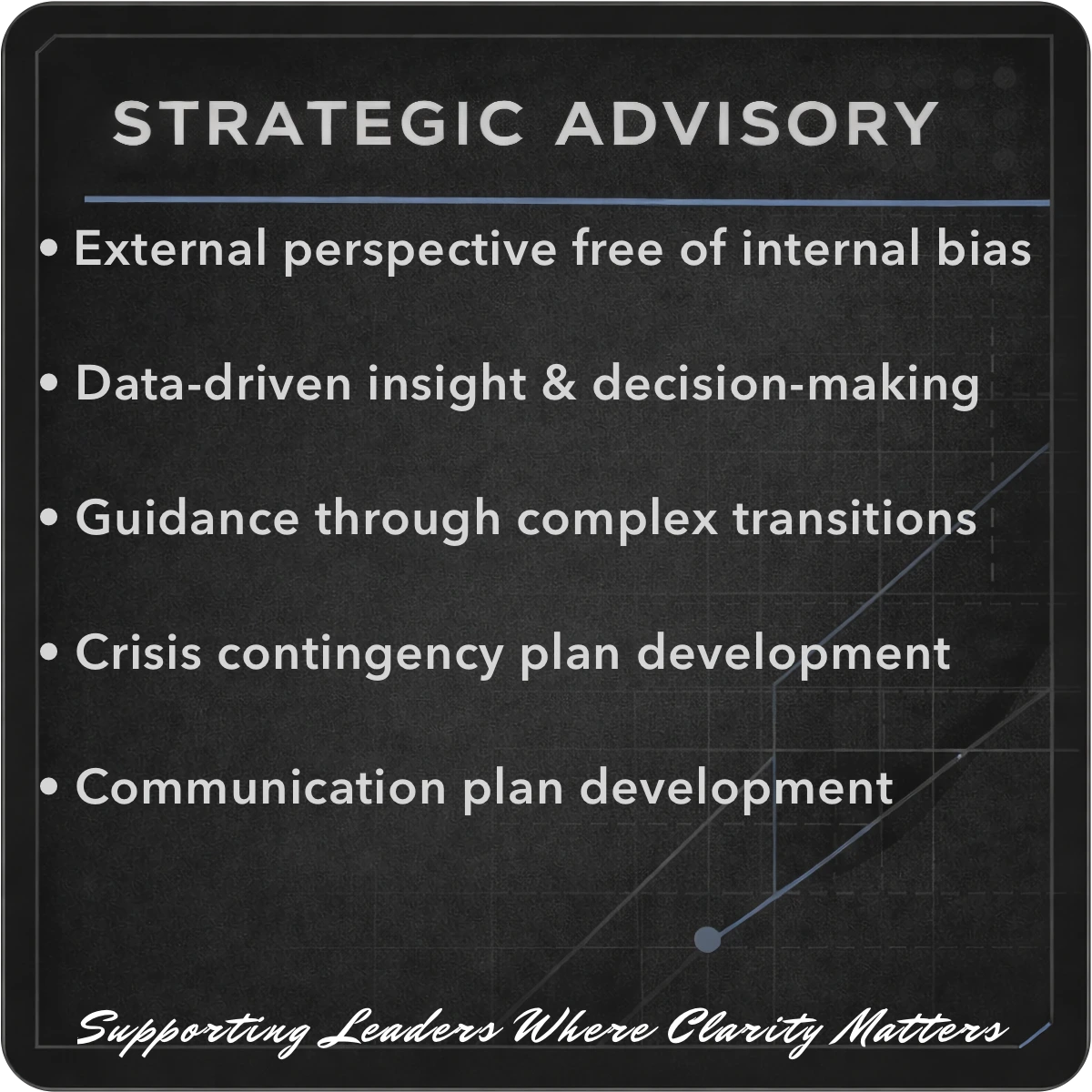
Strategic Advisory
Strategic framing, options analysis, and stakeholder alignment.

We bring disciplined analysis to moments of strategic inflection, examining downstream consequences, trade-offs, and institutional impact. We build the decision frameworks that help leaders evaluate their options with confidence, and ensure the communication strategy that follows is precise, credible, and aligned across boards, investors, teams, and the public.

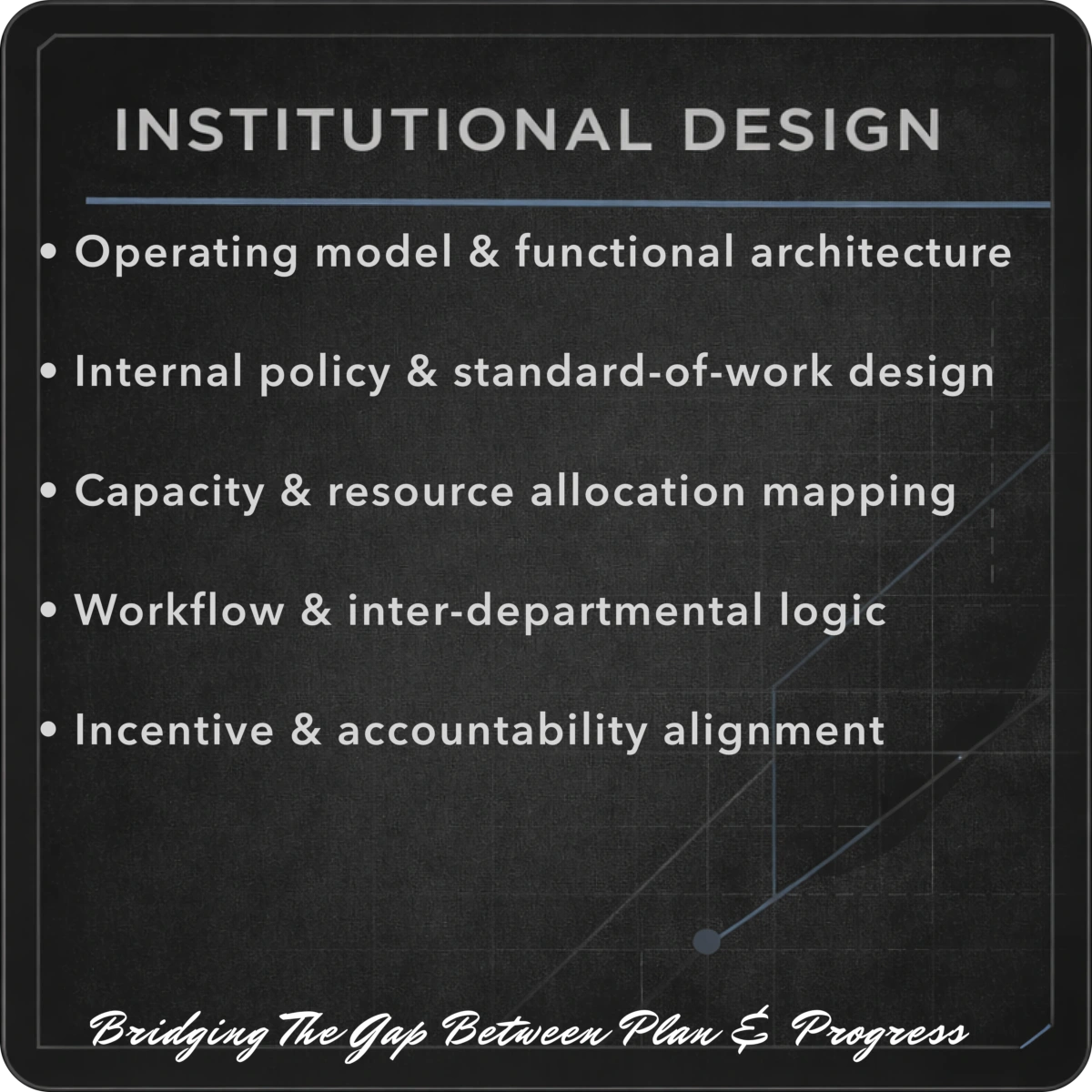
Institutional Design
Operating models, accountability, and optimisation.

We audit the internal systems that most firms never examine: how information flows, how decisions are authorised, and where things fall apart between departments. We implement operating cadences that eliminate meeting fatigue and ensure strategy reaches the front lines with zero distortion.

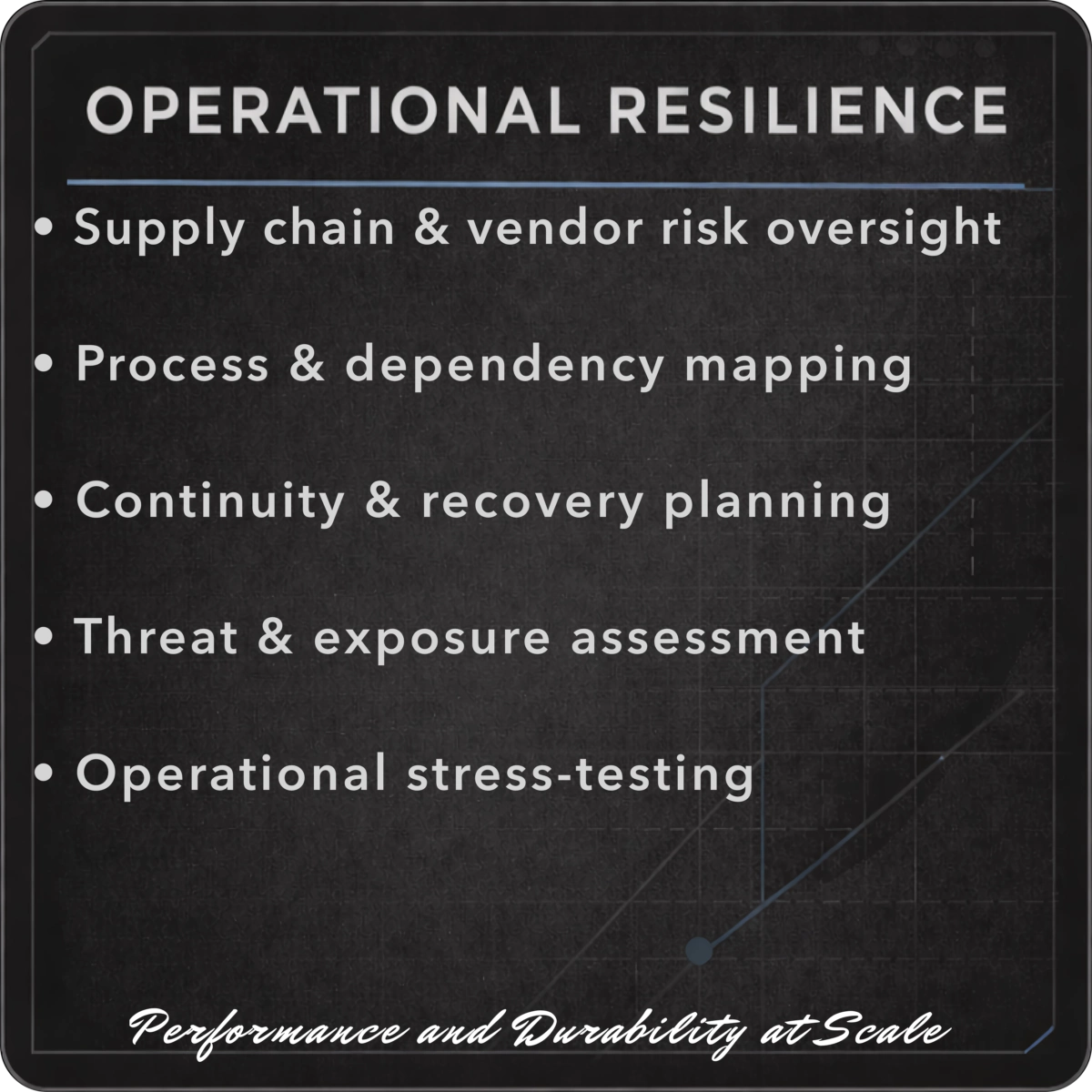
Operational Resilience
Risk mapping, supply chain oversight, and external dependency intelligence.

Leveraging structured external research and technical risk-mapping, we identify vulnerabilities in external dependencies and supply chains before they manifest as operational failures.

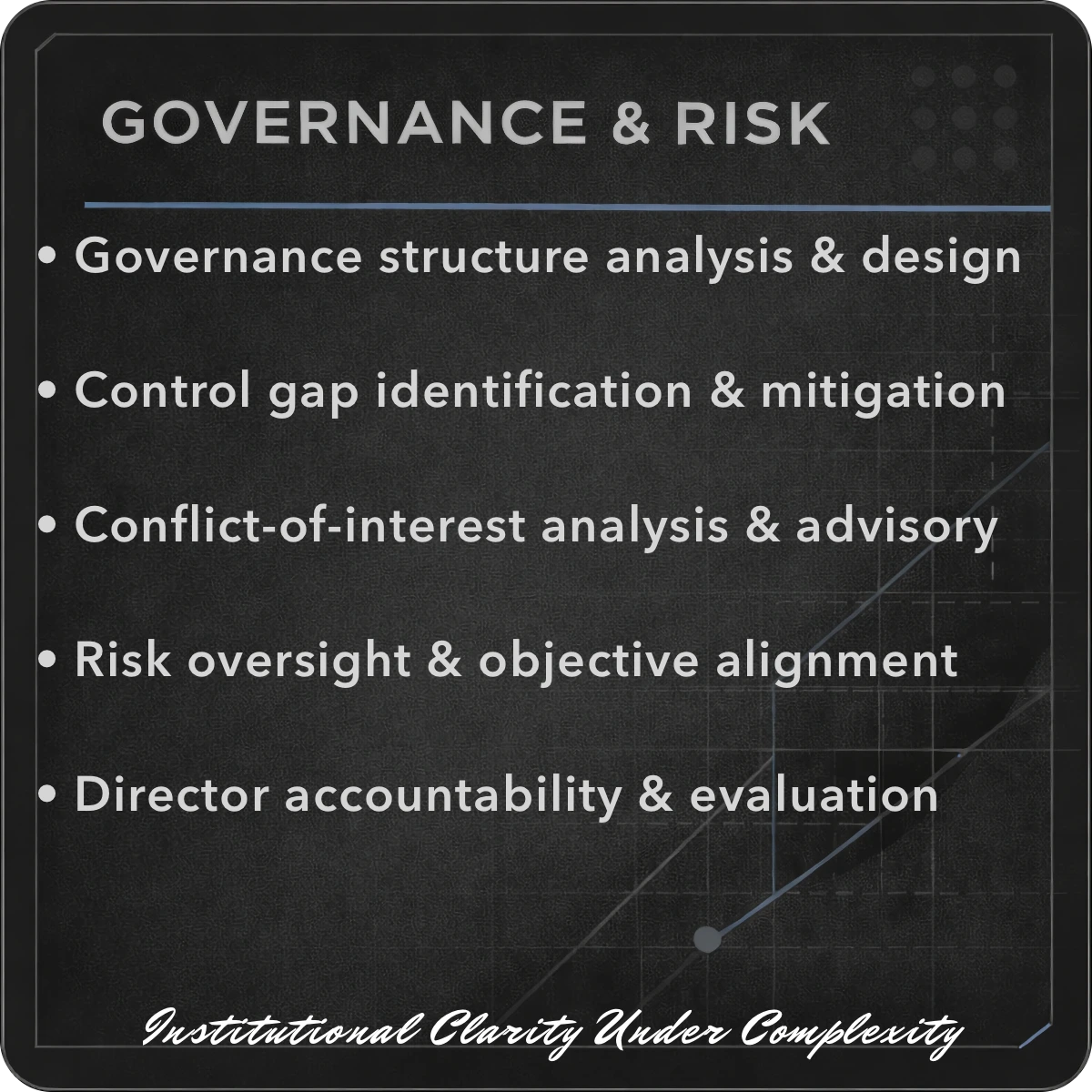
Governance & Risk
Institutional clarity where governance meets complexity.

Independent assessment of governance structures, internal controls, and risk exposure. We identify gaps, map conflicts of interest, and deliver remediation roadmaps built for board presentation and regulatory confidence.


Anonymised Case Studies

These examples are anonymised and intentionally non-identifying. They reflect prior advisory experience and illustrate the style of analysis and execution.

Governance Reset
Clarifying decision rights and accountability in a multi-stakeholder environment. Context: Mid-market organisation with board-level tension and unclear authority lines.

Challenge: Decisions were either delayed or re-litigated; ownership was diffuse and approvals were inconsistent.

Intervention: Mapped decision pathways, implemented a decision-rights framework, and introduced a cadence for escalation and documentation.

Outcome: Reduced decision latency, improved internal alignment, and created defensible governance records suitable for board scrutiny.

Operational Stabilisation
Reducing failure points where execution breaks between departments. Context: Founder-led operation transitioning toward institutional cadence.

Challenge: Work handoffs were undocumented; priorities changed weekly; the front line received distorted instructions.

Intervention: Audited information flow, rebuilt operating cadence, created a single-source priority system, and tightened escalation rules.

Outcome: Fewer rework cycles, cleaner accountability, and measurable improvement in execution consistency under pressure.

Risk & Dependency Mapping
Identifying hidden external dependencies before they become failures. Context: Organisation exposed to third-party service and supply chain fragility.

Challenge: Critical operations relied on external vendors with unclear contingency plans and weak monitoring.

Intervention: Built a dependency map, scored failure modes, and defined monitoring + fallback paths for high-impact points.

Outcome: Improved resilience posture and reduced single-points-of-failure through documented mitigations.

View the full case study archive

Long-form public analysis, including budget work and institutional research.


How We Work

Serious work rarely fails because people are careless; it fails because systems make clarity expensive. Our approach is built to reduce distortion, define accountability, and produce decisions that can survive scrutiny. If we engage later, the mandate should be narrow enough to execute cleanly, but rigorous enough to hold up under pressure.

Step 1: Context and Constraints
Clarify what is true, what is assumed, and what cannot change.

We start by mapping the operating reality. Stakeholders, incentives, dependencies, authority lines, timelines; the constraints that quietly dictate what is possible. If something is ambiguous, we treat it as risk until it is resolved. This stage is designed to prevent expensive motion built on incomplete premises.

Step 2: Diagnosis and Options
Identify failure points and establish a defensible set of paths forward.

We isolate where execution breaks down, where decisions stall, and where governance is either unclear or performative. Then we develop options with explicit trade-offs. Good options are not inspirational; they are workable. If the decision requires board comfort, public credibility, or internal alignment, we frame it accordingly.

Step 3: Mandate and Execution
Define the mandate tightly; execute without theatre.

We convert the chosen direction into a practical mandate: decision rights, cadence, owners, timelines, and the minimum artefacts required to keep alignment intact. Meetings are not the work; they are the cost of coordination. If the operating system is sound, execution becomes quieter; results become louder.

Step 4: Closeout and Continuity
Leave behind structure, not dependence.

The objective is institutional strength, not advisor reliance. We document what matters, establish a sustainable operating cadence, and ensure accountability is durable after we step away. If the work is done properly, the organisation should feel clearer, calmer, and more difficult to derail.

Discretion is assumed, and precision is non-negotiable; trust is a daily behaviour.


We believe strong organisations are built on clear thinking, honest assessment, and disciplined execution. Whether you are launching your first venture or stewarding an established institution, the fundamentals do not change: understand your risks, align your incentives, and make decisions you can defend. We help leaders build structures that perform with integrity under pressure.

Our approach is predicated on absolute candor. We do not produce lengthy slide decks to justify our presence; we produce measurable outcomes that justify your investment.

Founder’s Note

Joseph Diamanti

Diamanti Consulting is being built as an institutional-grade advisory asset: disciplined analysis, candid assessment, and execution systems that hold up under scrutiny.

I built Diamanti Consulting from a simple conviction: most organisational failure isn't a lack of effort or intelligence, but a breakdown in clarity.

Information gets diluted; incentives drift; hard conversations are postponed.

Over time, teams begin operating on assumption rather than alignment, and performance suffers quietly before it fails publicly.

My work has taken me across a wide spectrum of environments. I have advised founder-led ventures navigating their first real inflection point; small and mid-sized businesses working to stabilise growth; and larger institutional settings, including global technology platforms and complex public-facing organisations.

The patterns are remarkably consistent.

Whether the team sits around a single boardroom table or across multiple continents, the underlying questions are the same: Who is accountable; how are decisions made; and can the structure withstand pressure?

I don't see a meaningful divide between the so-called little guy and the enterprise. Both deserve disciplined thinking and structural clarity. Both can be constrained by outdated systems or informal habits that no longer serve them. Both can benefit from honest assessment and pragmatic design.

Diamanti Consulting is being built to serve that full arc.

The vision is straightforward: provide clear analysis, candid perspective, and operational architecture that performs in the real world. Institutions do not need posturing; they need alignment, accountability, and decisions they can defend. Trust is a daily behaviour.

If that resonates, a conversation is a good place to begin.

Joseph Diamanti
Founder
View LinkedIn Profile